For US outdoor power equipment brands, landscaping distributors, and private-label retailers, the hedge trimmer blade is one of the most consequential components in the product. It determines cut quality, vibration, blade life, and—when it fails—the volume of warranty claims a brand has to absorb. Sourcing custom hedge trimmer blades is therefore not a simple price exercise. It requires a supplier that can hold tolerances, control hardness, and repeat the same specification across production runs measured in hundreds of thousands of units.
This guide outlines what US buyers should evaluate when selecting a manufacturing partner for custom hedge trimmer blades, from material and heat treatment through OEM/ODM development and export logistics.
What "Custom" Actually Means in Blade Manufacturing
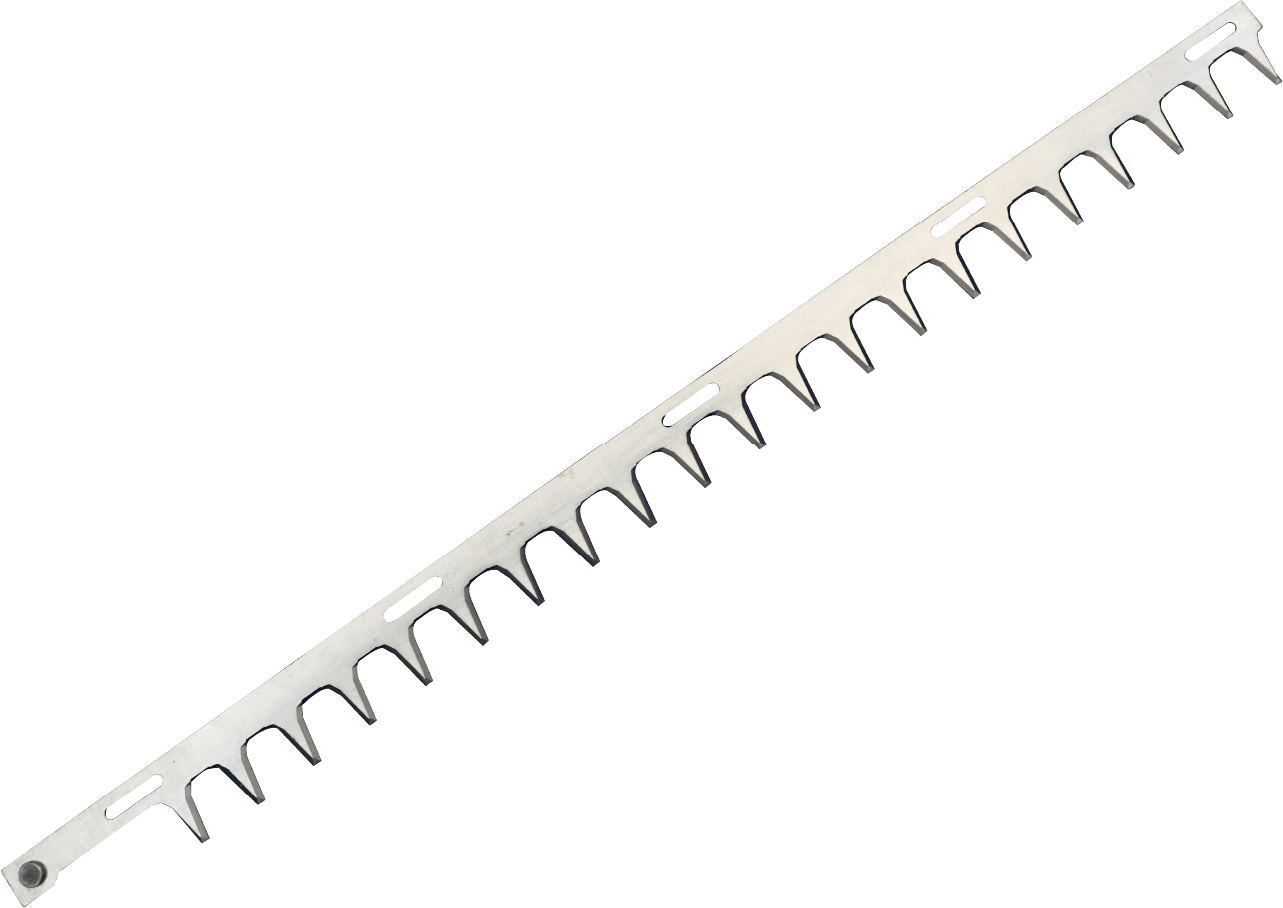
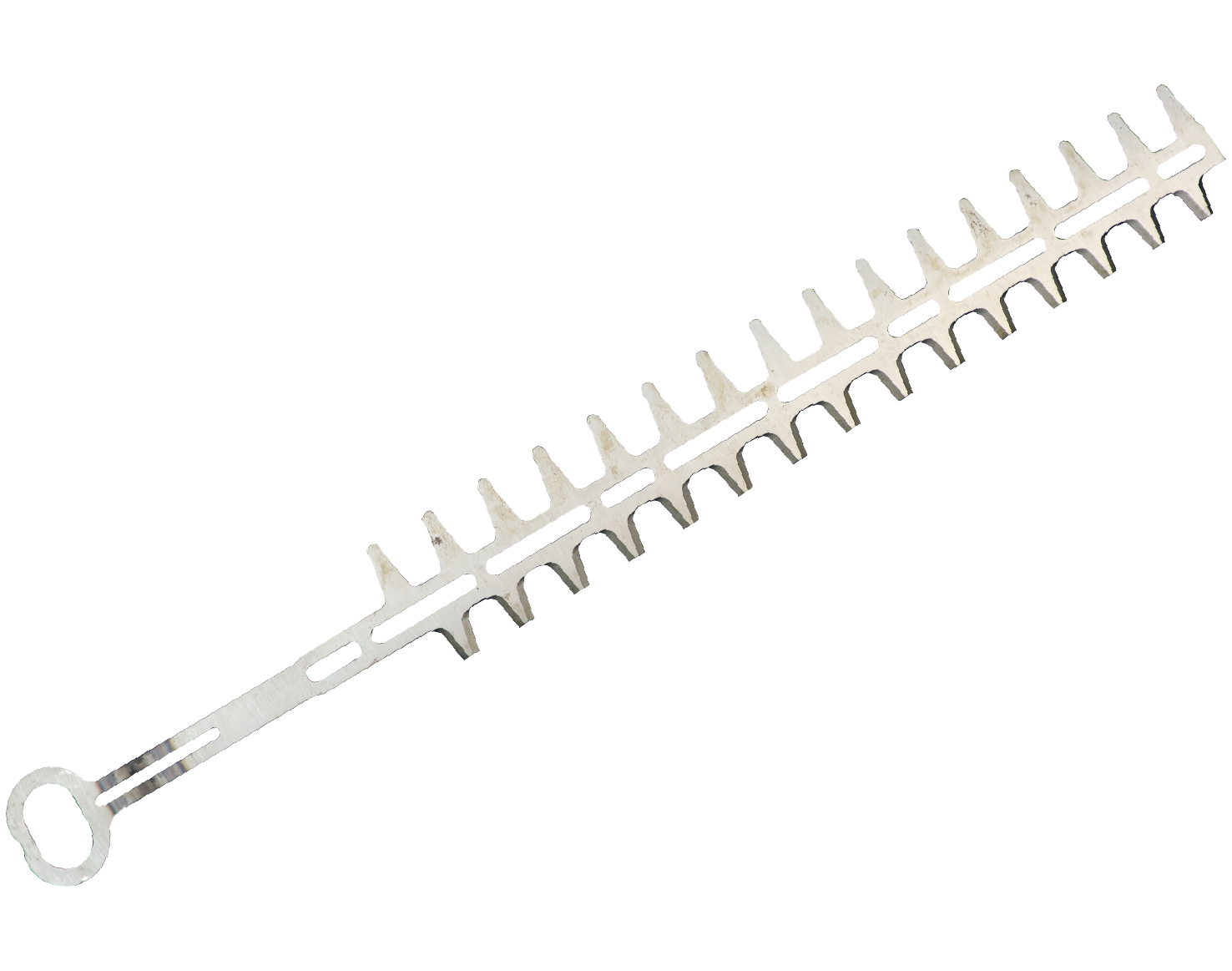
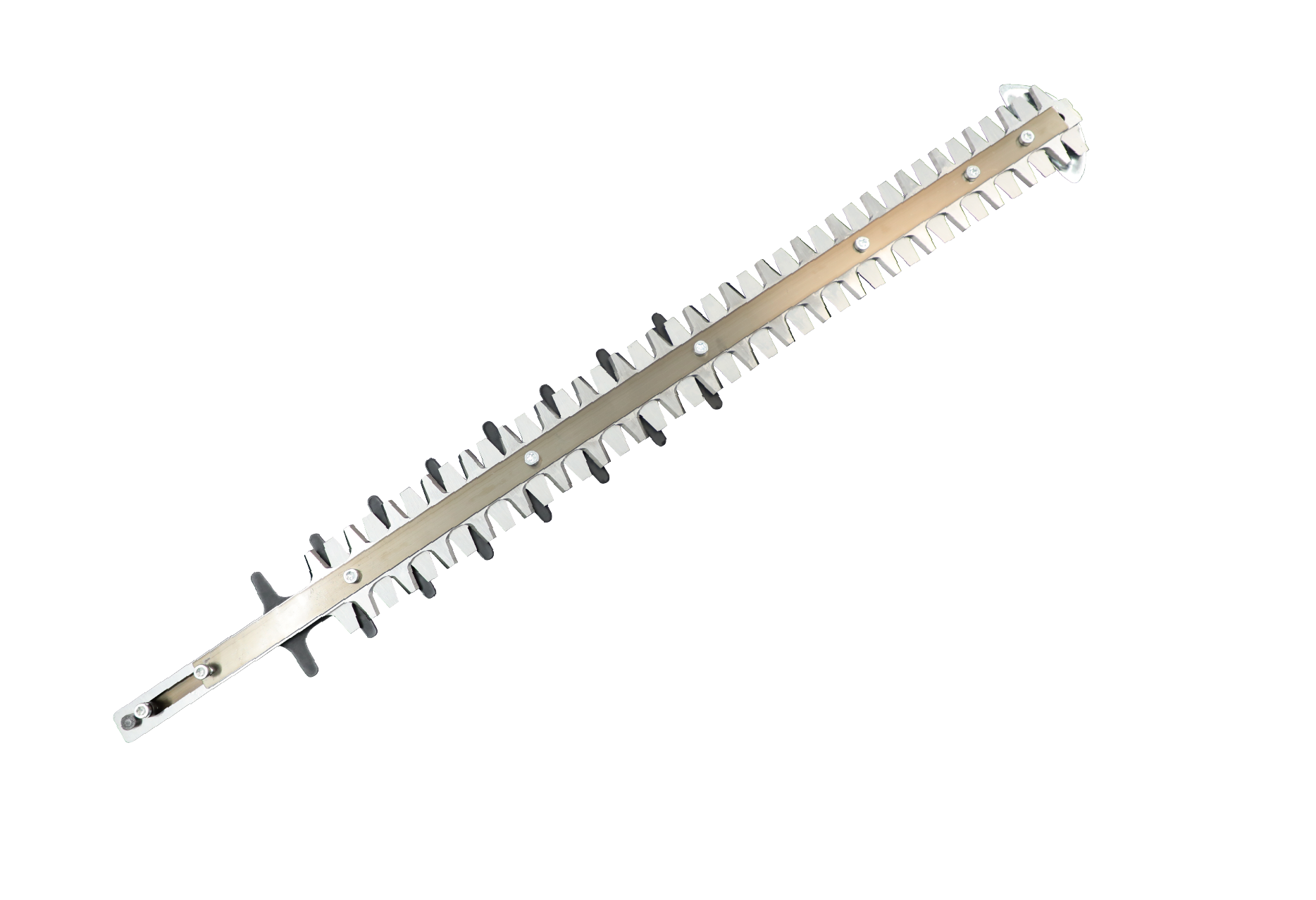
Custom hedge trimmer blades are rarely a single part. A typical project involves a set of specifications that must work together:
Blade geometry: tooth pitch, tooth profile, cutting angle, and blade length matched to the trimmer's stroke and motor outputMaterial grade: carbon steel, alloy steel, or stainless depending on corrosion exposure and cost targets
Hardness and heat treatment: edge hardness balanced against spine toughness to resist chipping
Surface finish and coating: for friction reduction, corrosion resistance, and appearance
Mounting interface: bolt patterns, bushing dimensions, and clearance for the cutter bar assembly
Buyers who treat these as independently negotiable items often discover later that a cheaper material or a shortened heat-treat cycle has shifted blade performance. A capable manufacturing partner will treat the specification as a system.
Key Factors When Selecting a Blade Manufacturer
1. Material and Heat Treatment Control
Blade life is driven by hardness consistency more than by peak hardness. Ask how the supplier verifies hardness—sample testing per batch, in-line measurement, or both—and what documentation accompanies each shipment. For applications involving frequent contact with abrasive hedges or sandy environments, alloy steel grades with controlled tempering usually outperform lower-cost carbon steel over the product's service life.
2. Dimensional Accuracy and Repeatability
Hedge trimmer blades must interchange across production batches and, in many cases, across service parts channels. Critical dimensions include blade thickness, hole positions, straightness, and tooth-to-tooth consistency. Buyers should request the supplier's inspection method and the tolerance range they can hold in routine production, not just in a first article.
3. Tooling and OEM/ODM Capability
If you are developing a new trimmer platform, tooling investment and design support matter as much as unit price. An experienced partner can review tooth geometry against the intended cutting application, suggest material alternatives, and build tooling that supports both initial launch volumes and later capacity increases.
4. Coating and Corrosion Performance
For the US market, where products are sold across humid southern states and coastal regions, corrosion resistance affects both appearance and function. Common approaches include black oxide, electrophoretic coating, and nickel-based finishes. The right choice depends on your warranty policy and price positioning.
5. Production Capacity and Lead Time
Blade demand is seasonal in the US, with spring peaks for landscaping equipment. Suppliers must be able to ramp output ahead of the season and hold consistent lead times, not just quote a theoretical capacity.
Common Sourcing Mistakes US Buyers Make
Selecting on unit price alone. A lower quoted price often reflects thinner material, reduced heat treatment, or looser tolerances that surface as field failures.Ignoring hardness documentation. Without batch-level hardness records, quality problems are difficult to trace and correct.
Skipping the first article process. Approving production without validating dimensions, hardness, and cutting performance on a physical sample creates expensive rework.
Underestimating packaging and shipping. Blades are heavy, edge-sensitive, and prone to corrosion in transit. Packaging specifications should be agreed before the first order, not after.
Integrating Manufacturing Capability with OEM/ODM Programs
For brands developing private-label or original equipment products, the manufacturing partner functions as an extension of the product team. That means support across:
Design review and tolerance consultationTooling development and sample production
Process documentation for repeat orders
Packaging design and labeling for retail or bulk distribution
A manufacturer with established OEM and ODM workflows can shorten development cycles and reduce the risk of specification drift between the sample and mass production.
Export, Compliance, and Logistics for US Buyers
Sourcing custom blades from an overseas manufacturer introduces logistics and documentation requirements. US importers should confirm:
Correct HS classification and duty treatment for the specific blade typeConsistent labeling and packaging that meets retailer and e-commerce requirements
Corrosion protection during ocean transit
A workable delivery schedule tied to the US selling season
A supplier with established export experience can usually anticipate these requirements and reduce the administrative burden on the buyer's procurement team.
How a Manufacturing Partner Supports Long-Term Supply
Steel blade manufacturing at scale depends on disciplined process control. Companies such as Ltd build their production around material selection, controlled heat treatment, precision machining, and batch inspection, which is what allows specifications to hold from sample approval through repeat production. For US buyers, the practical value is predictability: the same blade, the same hardness, the same cutting performance, order after order.
When evaluating a potential partner, ask for their process documentation, inspection standards, and experience with export markets. The answers reveal whether they can support a long-term program or only a one-time order.
FAQ
What information do I need to provide to get an accurate blade quote? Provide blade dimensions, tooth profile, material grade, required hardness range, surface finish, mounting hole positions, expected annual volume, and packaging requirements. Drawings or physical samples accelerate the process considerably.
Can custom hedge trimmer blades be produced to match an existing OEM part? Yes. Many manufacturers reverse-engineer from samples or drawings and produce interchangeable parts. Confirm dimensional tolerances and material equivalence before approving production.
How long does tooling and sample development usually take? It depends on complexity, but most projects move through design review, tooling, and sample approval in a matter of weeks. Buyers should build this into their product launch timeline.
What packaging options are available for US retail and distribution? Common options include bulk cartons, skin packaging, blister packs, and private-label printed packaging. Packaging should be specified alongside the blade itself to avoid delays.
Conclusion
Custom hedge trimmer blade sourcing rewards buyers who look beyond unit price and evaluate material control, hardness consistency, dimensional accuracy, and production reliability. US brands competing on cut quality and warranty performance need a manufacturing partner that can hold a specification across seasons and volumes. Establishing clear requirements, validating samples, and confirming export and packaging details early will reduce risk and keep supply predictable. Partnering with an experienced blade manufacturer makes that process considerably easier.