Telescopic pole saws sit in a demanding corner of the garden tool market. Buyers expect long reach, clean cutting performance, secure locking mechanisms, and consistent durability across thousands of units. For importers, distributors, and private-label brands, choosing the right telescopic pole saw manufacturer in China is less about finding the lowest quotation and more about finding a supplier whose manufacturing system can hold tolerances, control heat treatment, and deliver repeatable batches season after season.
This guide covers the technical and commercial factors that matter when sourcing telescopic pole saws from China, from pole material and blade specifications to supplier evaluation and OEM/ODM capabilities.
What Defines a Telescopic Pole Saw Beyond the Catalogue Photo
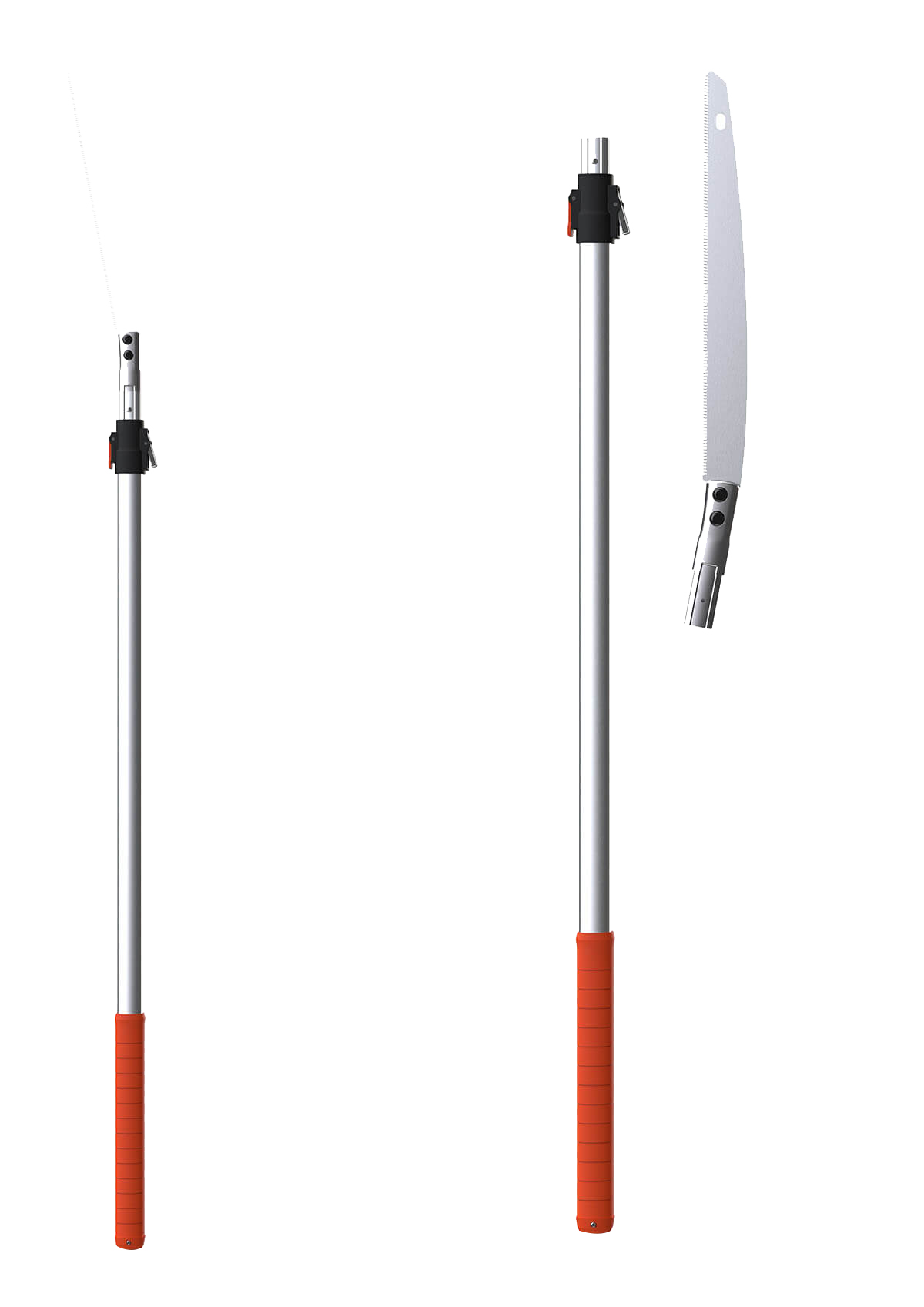
A telescopic pole saw is a system, not a single part. The pole assembly usually consists of two or three aluminium or fibreglass sections with locking collars or cam levers. The cutting head may be a fixed saw blade, a reciprocating blade driven by a power unit, or a pruning saw blade mounted on an angle-adjustable head. Some models add rope-assisted pull-stroke cutting, while others are designed as components for cordless power tool platforms.
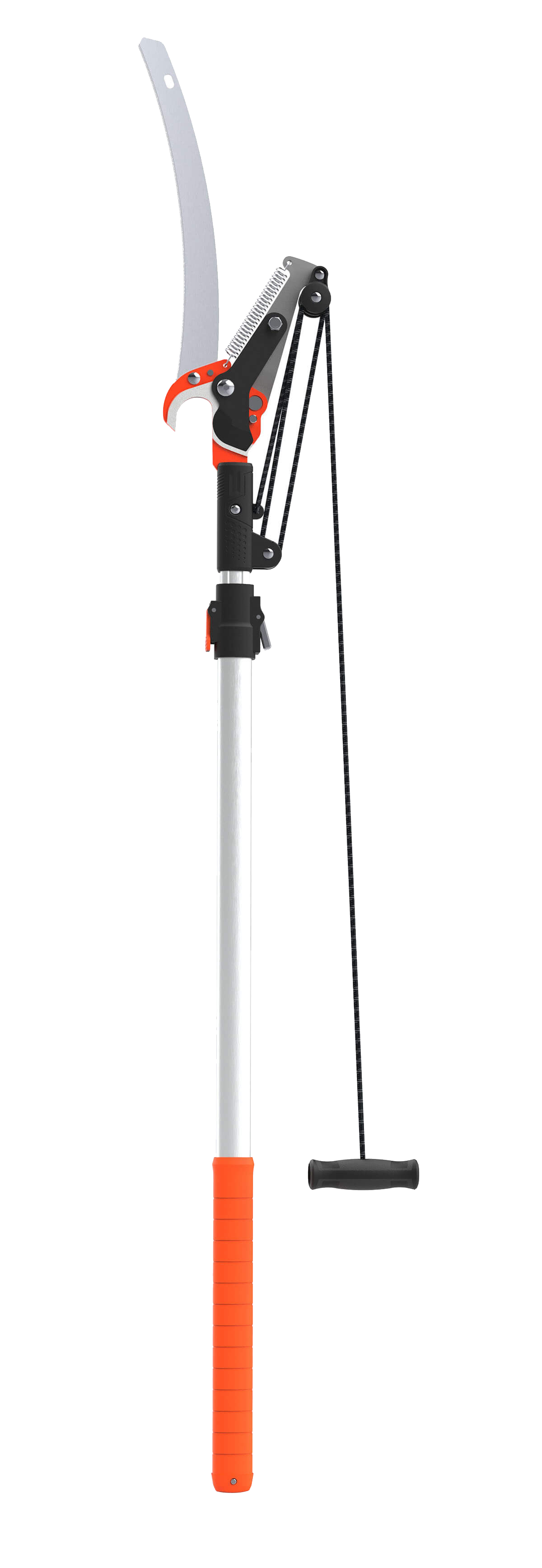
For B2B buyers, the specification list should include:
Pole material and wall thickness – determines rigidity, weight, and deflection at full extensionLocking mechanism type – cam lever, twist collar, or push-button; each affects user safety and warranty risk
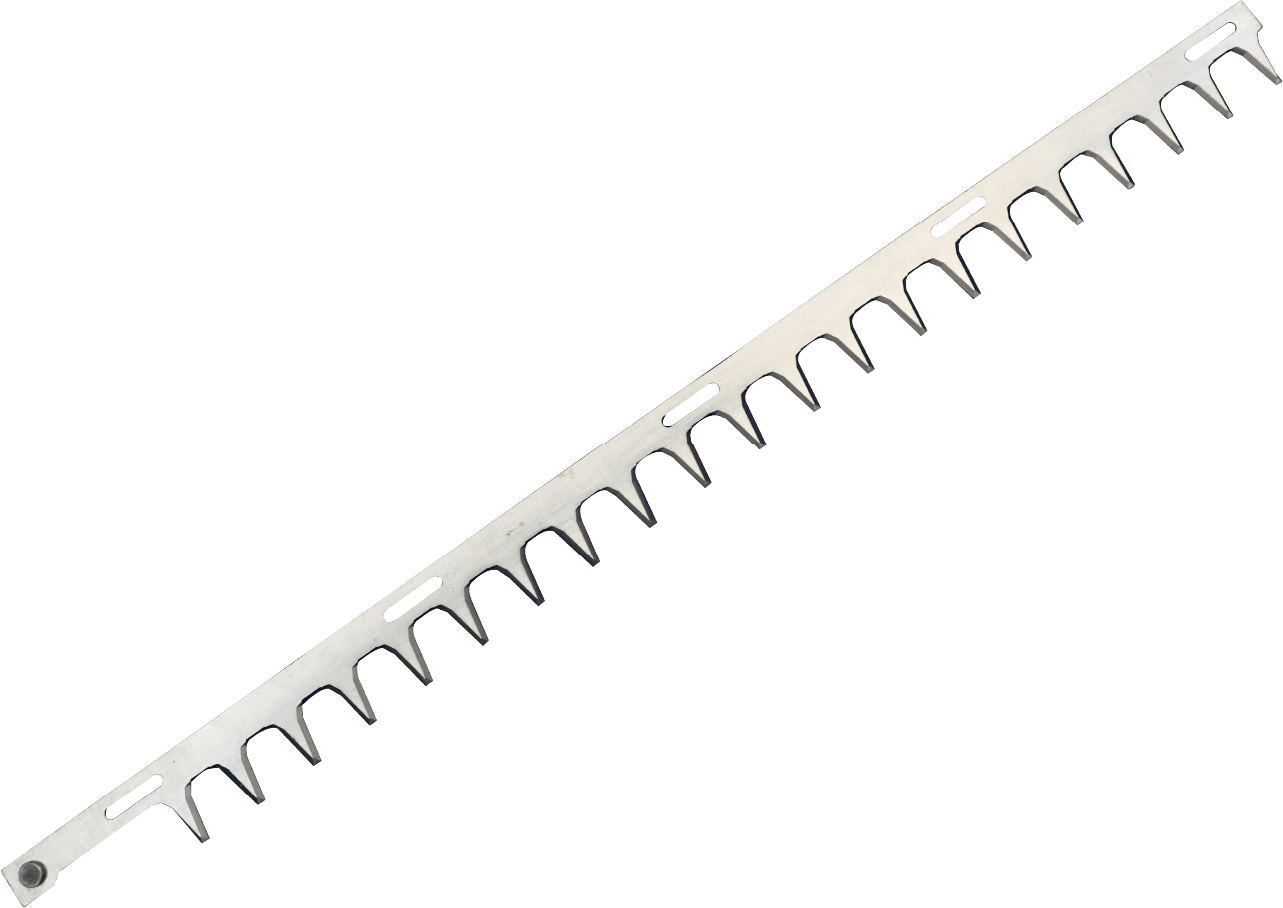
Blade steel and tooth geometry – hardpoint, chrome-plated, or impulse-hardened teeth change cutting speed and service life
Handle and grip materials – often injection-moulded components where material grade affects UV resistance and grip durability
Compatibility – whether the saw head fits a specific power unit brand, battery platform, or universal connector
Buyers sourcing for DIY retail, landscaping professionals, or power tool accessory programmes will weight these factors differently. A mass-retail pole saw prioritises cost control and packaging; a professional-grade tool prioritises locking precision and blade retention.
Why Manufacturing Depth Matters More Than Assembly Capacity
Many Chinese suppliers can assemble a pole saw. Fewer can control the full chain that determines whether the product survives a two-year retail warranty. Heat treatment of blades, tooth grinding, surface coating, and injection moulding of handles and locking components are the processes where quality is either built in or lost.
Anhui Wisdom Mechanical Technology Co., Ltd. operates an integrated production system covering material processing, heat treatment, laser cutting, metal stamping, tooth grinding, surface treatment, injection moulding, aluminium die casting, and assembly. For pole saw programmes, this means blade hardness, pole fittings, and moulded components can be developed and validated under one quality system rather than coordinated across unrelated subcontractors. The company holds ISO 9001, ISO 14001, ISO 45001, and BSCI certification, which matters when buyers need social compliance documentation for European or North American retail channels.
Key Factors When Evaluating Telescopic Pole Saw Suppliers
1. Process control from raw material to finished goods. Ask which processes are in-house and which are outsourced. Integrated heat treatment and tooth grinding give a supplier direct control over blade hardness consistency, the most common source of field failures.
2. Engineering and customisation capability. OEM/ODM projects typically require adjustments to pole length, locking design, blade tooth pattern, handle geometry, and packaging. A supplier with in-house R&D and tooling can iterate samples faster and protect your design in production.
3. Quality consistency at volume. Request inspection data across multiple production lots, not a single golden sample. Variations in coating thickness or locking tolerances usually appear only after several thousand units.
4. Export and documentation experience. International buyers need consistent labelling, packaging compliance, and shipping documentation. Suppliers already serving export markets understand these requirements and reduce friction at the port.
5. Capacity and delivery reliability. Confirm realistic lead times against your seasonal window. Garden tool demand is highly seasonal, and a supplier without stable production planning will struggle in peak months.
Common Sourcing Mistakes to Avoid
Approving a sample without a production-lot validation. A hand-built sample rarely reflects mass-production tolerances in locking collars or blade grinding.Ignoring heat treatment specifications. Undertreated or overtreated blades may pass initial cutting tests but fail after repeated use, generating returns.
Treating packaging as an afterthought. Retail packaging, hang tags, and barcoding requirements should be confirmed before tooling is finalised.
Sourcing components from multiple suppliers without a quality owner. Mixed sourcing can leave no single party accountable when a batch fails.
How OEM and Private-Label Programmes Usually Work
Most telescopic pole saw OEM projects begin with a specification brief covering pole length range, cutting capacity, blade type, target retail price band, and packaging format. The supplier then produces drawings or samples for approval. Tooling for moulded components and stamping dies is typically the longest lead item, so early engagement with a manufacturer's engineering team shortens the overall timeline.
Wisdom Mechanical supports customised manufacturing for garden tool, hardware tool, and power tool customers, including blade geometry, handle moulding, and surface finish requirements. For buyers developing a new pole saw line, involving the manufacturer during specification rather than after design freeze reduces the risk of tooling revisions later.
FAQ
What should importers check first when sourcing telescopic pole saws from China? Start with the blade manufacturing process and locking mechanism design. These two areas drive most warranty claims. Confirm whether heat treatment and tooth grinding are done in-house, and request production-lot inspection records rather than relying on a single sample.
Can Chinese manufacturers produce private-label telescopic pole saws? Yes. Most established manufacturers offer OEM and ODM services covering blade specifications, pole length, handle design, and retail packaging. Buyers should confirm tooling ownership, minimum order quantities, and sample approval stages before committing to a programme.
What certifications should a pole saw supplier hold for export? ISO 9001 is the baseline quality system. Depending on your market, buyers may also require ISO 14001, ISO 45001, or BSCI social compliance documentation. Confirm the certificates cover the actual production site, not only a trading entity.
How long does a typical OEM pole saw project take? Sampling usually takes several weeks, while tooling for moulded or stamped components can extend the timeline further. Seasonal buyers should begin supplier discussions well before the target shipping window to allow for sample revisions and production validation.
Conclusion
Sourcing telescopic pole saws from China rewards buyers who look past the quotation sheet. Blade heat treatment, locking mechanism precision, moulded component quality, and production consistency determine whether a product performs in the field or generates returns. Working with a manufacturer that controls these processes in-house, such as Wisdom Mechanical, gives importers stronger quality visibility and more reliable delivery across seasonal peaks. Define your specification clearly, validate production lots, and confirm documentation early.